Here is what to see in Aswan, from Philae and the High Dam to a felucca at sunset
Here is what to see in Aswan, from Philae and the High Dam to a felucca at sunset
The sights that matter in Aswan are Philae temple on its island, the High Dam and the old dam, the Unfinished Obelisk in the granite quarry, Elephantine Island, the Nubian Museum, the garden on Kitchener's Island, the Tombs of the Nobles and St Simeon monastery on the west bank, the Aga Khan mausoleum seen from the water, a Nubian village, the souk and a felucca at sunset. Abu Simbel is the day trip, with Kalabsha and Lake Nasser for a third day. Two full days cover the city, one day covers the big three. Below is each sight, how long it needs and three plans.
Why Aswan is worth slowing down for
Aswan is the southern end of the Nile Valley tour and it looks nothing like Luxor or Cairo. The river widens and splits around granite islands, black boulders sit in the current, and the Sahara comes right down to the water on the west bank. Most of the people you meet are Nubian, the pace is slower and the air is dry and clean.
That geography is the key to planning. The sights sit in four zones: the water (Philae, the islands), the dam road south of town (High Dam, Kalabsha, the obelisk quarry), the west bank (tombs, monastery, mausoleum) and the city (Nubian Museum, souk, corniche). Each zone is a half day. Group your sights by zone and Aswan is easy.
Aswan is also hot, 75 to 80 F (24 to 27 C) on a winter day and past 104 F (40 C) in summer. In every season the two hours after sunrise and the two before sunset are when the granite is at its best.
Philae, the temple that moved to another island
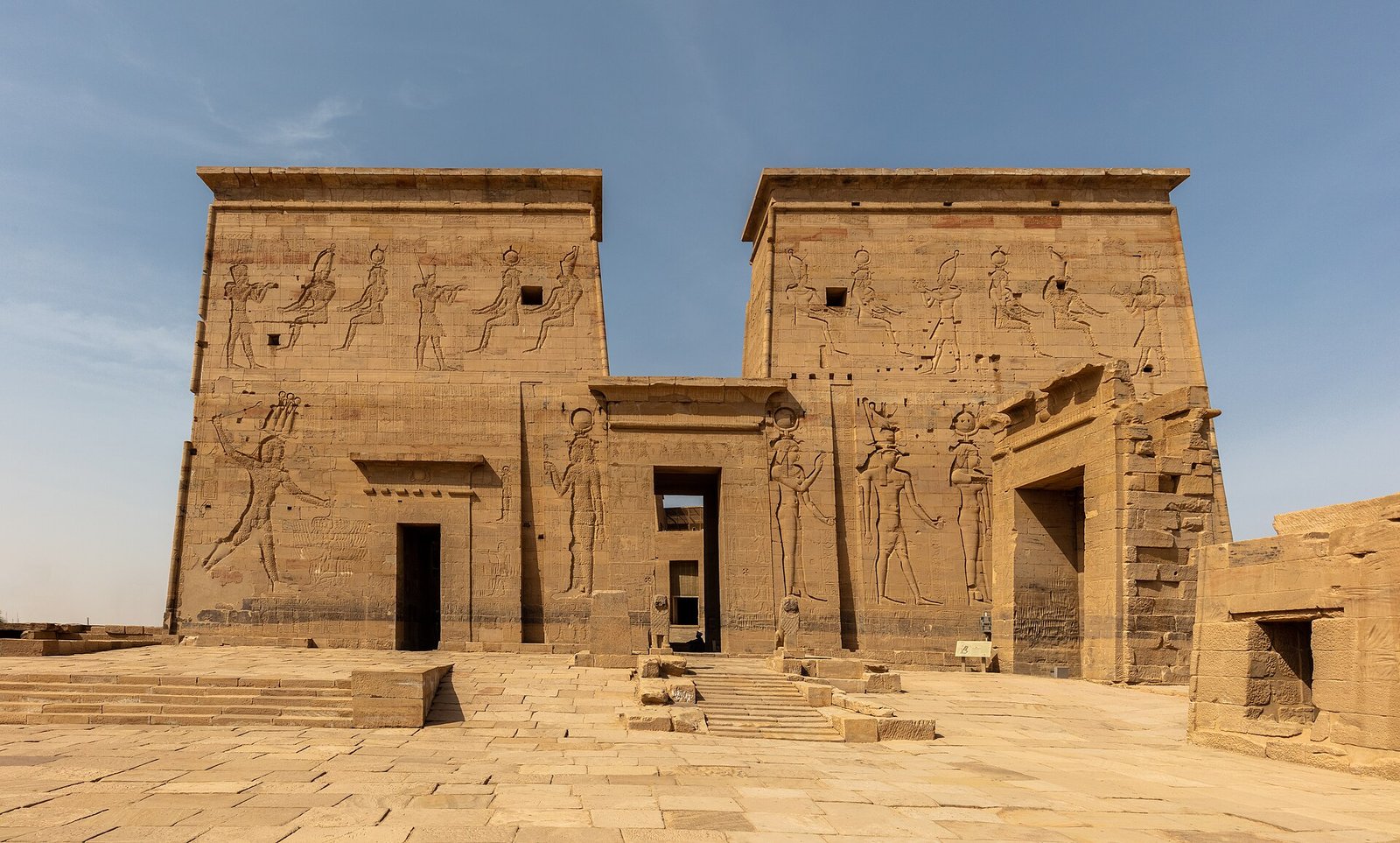
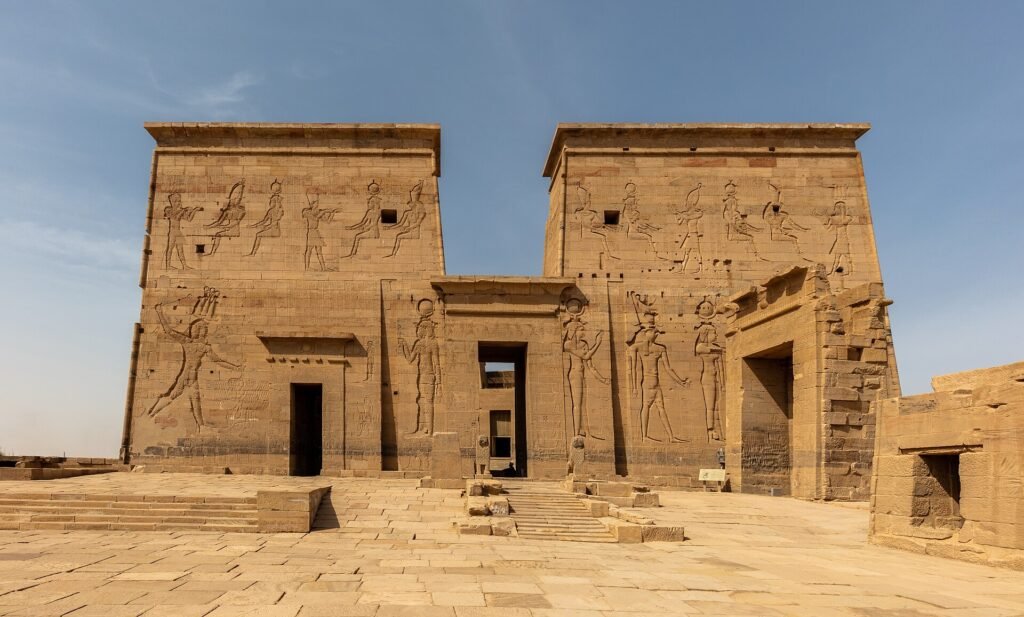
Philae is the sight everyone comes to Aswan for, and it earns it. The temple of Isis was the last place in Egypt where the old gods were worshipped, staying open into the sixth century, long after the rest of the country had turned Christian. The Kiosk of Trajan on the waterfront is the most photographed building in southern Egypt.
The modern story is as good as the ancient one. After the first dam went up, the island flooded for most of every year and travelers rowed between the column tops. When the High Dam threatened to drown it for good, the complex was cut into tens of thousands of numbered blocks and rebuilt on the neighboring island of Agilkia. Look closely at the joints on several walls and you can still see the numbers.
You reach it by motorboat from the marina south of the old dam, a ten minute crossing that is part of the pleasure. Give it ninety minutes, early before the cruise groups arrive or late when the light turns the sandstone gold. Our guide to visiting Philae temple covers the layout, the reliefs worth finding and the sound and light show.
The High Dam, the old dam and the Unfinished Obelisk
These three sit on the same road south of the city and are done together in a morning. Dam first while it is cool, quarry last because it has no shade. You also cross the old dam on the way, a British granite wall from the start of the twentieth century, raised twice and still working. It was this dam, not the High Dam, that first put Philae under water.
The High Dam
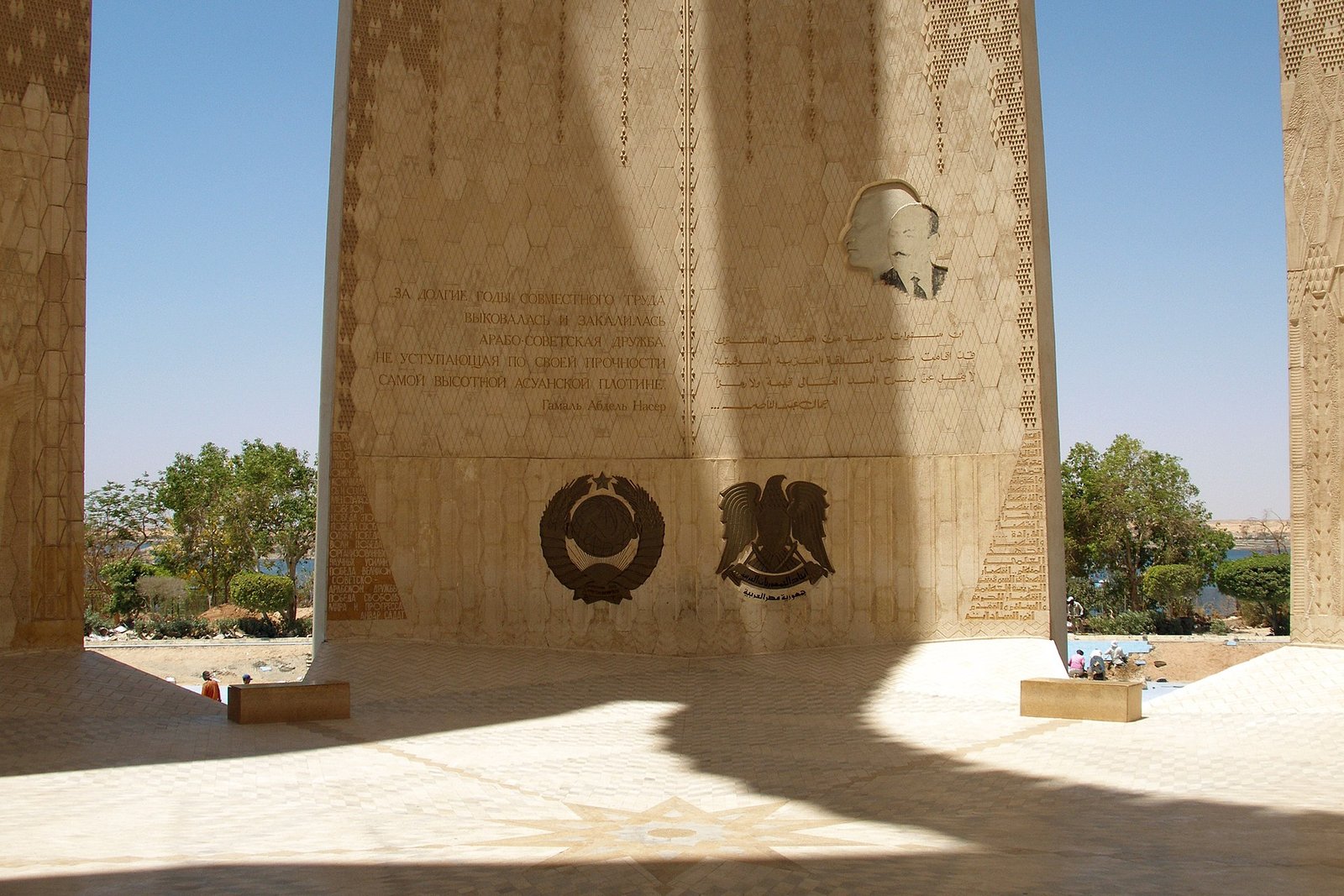
Built through the 1960s, the High Dam is a rock and clay wall more than two miles long holding back Lake Nasser, one of the largest reservoirs on earth. It ended the annual flood, gave Egypt electricity and year round irrigation, and drowned Lower Nubia in the process. The visit is a stop on the crest: the lake stretching south to the horizon, the river below, the lotus shaped friendship monument. Twenty to thirty minutes.
The Unfinished Obelisk
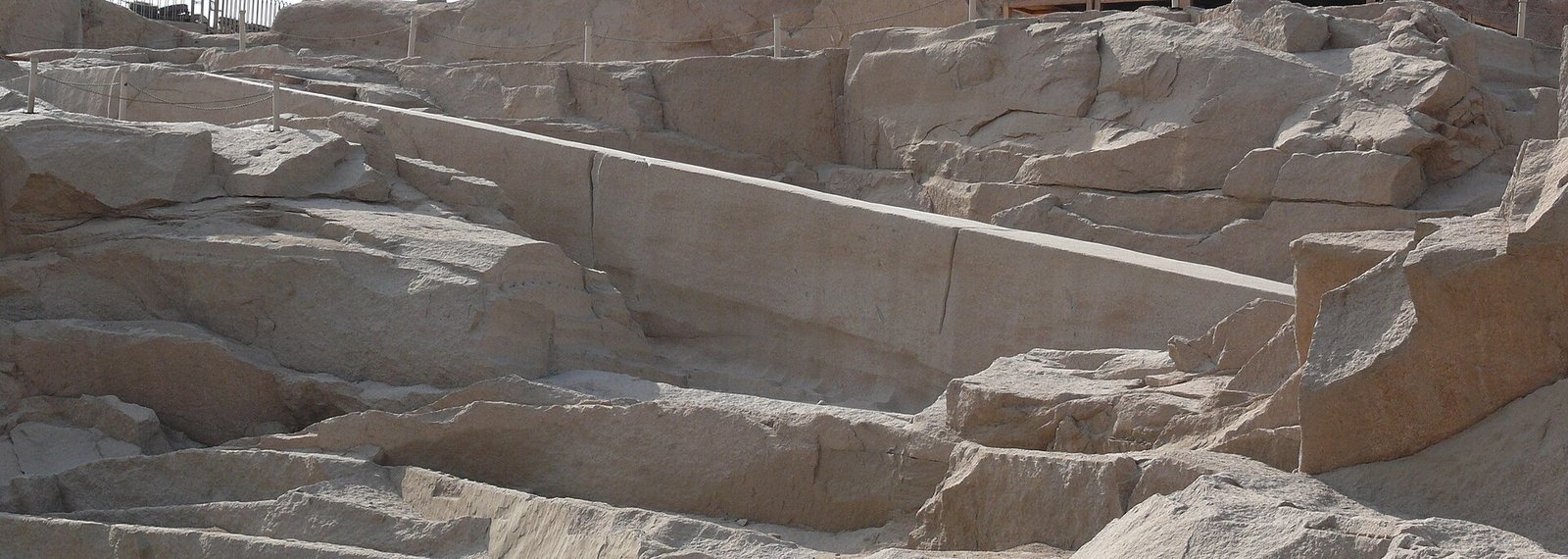
In the granite quarries on the edge of town lies the largest obelisk ever attempted, still attached to the bedrock underneath. It would have stood about 137 feet (42 meters) and weighed over a thousand tons. A crack opened as it was being cut and the work stopped, leaving the pounding marks of the dolerite balls in the trench around it. Forty five minutes, hat and water, and read our page on the Unfinished Obelisk and the quarries for what to look for.
Elephantine Island, the Aswan Museum and the Nubian Museum
Elephantine sits in the river directly in front of the corniche, a two minute crossing by ferry or felucca. Its southern tip is the ruined city of Abu, the frontier town that guarded Egypt's southern border for three thousand years: a rebuilt temple of Khnum, the ram headed god of the cataract, mudbrick houses and the Nilometer, a stone stairway where priests measured the flood and set the year's taxes.
The Aswan Museum stands among the ruins. The original villa has had long closures, so count on the annex and the open air site and ask us for the current situation the week you travel. The rest of the island is two Nubian villages with painted houses and palm gardens.
The Nubian Museum, on the east bank, is the museum most visitors skip and should not. It tells the story of Nubia from prehistory to the rescue campaign of the 1960s, with a scale model of the Abu Simbel move, a reconstructed Nubian house and superb statues. Ninety minutes in the hottest part of the afternoon is the right slot.
The west bank: Tombs of the Nobles, St Simeon and the Aga Khan mausoleum
Across the water are three sights that reward the crossing, and they chain together in one morning with a boat and a camel or a walk.
The Tombs of the Nobles are cut into the cliff of Qubbet el Hawa above the river. They belonged to the governors of the south in the Old and Middle Kingdoms, the men who led trading expeditions into Africa. The tomb of Harkhuf carries the text of a letter from the boy king Pepi II begging him to bring home the dancing dwarf he had found. The stairway is steep, and the view from the top over the islands is the best in Aswan.
From the tombs a sandy track leads inland to the monastery of St Simeon, a seventh century Coptic fortress abandoned when its wells ran dry. The mudbrick walls still stand two stories high around a church with faded paintings, monks' cells and a bakery. Twenty five minutes on foot or ten by camel, and you are usually the only people there.
The Aga Khan mausoleum crowns the hill above the landing, a pink granite tomb built for the leader of the Ismaili community, who wintered in Aswan. It is closed to visitors; you see it from a felucca on the water, as it was designed to be seen. Do the whole west bank before ten in the morning. There is no shade at any of the three.
Kitchener's Island, the Nubian villages, the souk and a felucca at sunset
Kitchener's Island, officially El Nabatat, is a botanical garden planted by the British general who was given the island in the 1890s and filled it with trees from India, Africa and the Far East. Forty minutes of shaded paths and birdsong, reached only by boat, and easy to combine with Elephantine on the same felucca.
The Nubian villages are the reason guidebooks call Aswan colorful. Gharb Seheil, on the west bank opposite the old dam, has houses painted blue, ochre and white with domed roofs, courtyards with hibiscus tea and henna, and small crocodiles kept in tanks as a tradition. It is set up for visitors and still genuine, particularly with a guide who knows the families. Our page on the Nubian village visit in Aswan explains how to make it more than a photo stop.
The souk runs parallel to the corniche for about a mile and is the easiest market in Egypt to enjoy: spices, dried hibiscus, peanuts, Nubian baskets and scarves, with far less pressure than Khan el Khalili. Go after sunset when the locals shop.
And then the felucca. A sail around Elephantine and Kitchener's Island in the last hour of daylight, with the mausoleum turning pink and the dunes glowing, is the single best hour of the Nile Valley tour. Our guide to a felucca ride on the Nile explains how the wind works and how long to book.
Beyond the city: Abu Simbel, Kalabsha and Lake Nasser
Abu Simbel is about 175 miles (280 kilometers) south of Aswan, near the Sudanese border, and it is the most spectacular sight in the south. The two rock temples of Ramesses II and Nefertari were cut from the mountain and lifted above the rising lake in the 1960s. From Aswan it is a day trip: by road, leaving before dawn, about three and a half hours each way, or by a short domestic flight that makes it a half day.
Tickets, timing and the two options are in our page on how to visit Abu Simbel, and the ready made version is our Abu Simbel day trip from Aswan.
Kalabsha is the sight almost nobody visits. Beside the High Dam, on a shore of Lake Nasser, three rescued monuments were regrouped: the large Roman era temple of Mandulis, a Nubian sun god; the rock chapel of Beit el Wali with battle scenes of Ramesses II that keep some color; and the open kiosk of Qertassi. A five minute boat ride, under an hour on site, and you will have it to yourself.
With a week in the south, a Lake Nasser cruise of three or four nights from Aswan to Abu Simbel, stopping at the rescued temples of Wadi el Seboua and Amada, is the quietest sailing in Egypt.
How much time each sight in Aswan needs
Use this table to build your own day. Times are on site, not counting the boat or the drive.
| Sight | Zone | Time on site | Best moment |
|---|---|---|---|
| Philae temple | Water, south of the old dam | 90 minutes | First boat or late afternoon |
| High Dam | Dam road | 20 to 30 minutes | Early, on the way to Philae |
| Unfinished Obelisk | Edge of town | 45 minutes | Before 10 am or after 4 pm |
| Elephantine and Aswan Museum | Water, opposite the corniche | 60 to 90 minutes | Late afternoon |
| Nubian Museum | City | 90 minutes | Hottest hours of the day |
| Kitchener's Island | Water | 40 minutes | With the felucca |
| Tombs of the Nobles | West bank | 60 minutes | First thing in the morning |
| St Simeon monastery | West bank | 60 minutes plus the walk | Straight after the tombs |
| Nubian village | West bank, by boat | 60 to 90 minutes | Late afternoon |
| Felucca at sunset | Water | 60 to 90 minutes | Last hour of daylight |
| Abu Simbel | Day trip south | 2 to 3 hours plus travel | Full day by road, half day by air |
Add it up and the city is two full days, with Abu Simbel as a third.
Aswan in 1, 2 or 3 days
One day
- Early morning: High Dam, cross the old dam, motorboat to Philae. Three hours door to door.
- Late morning: Unfinished Obelisk on the way back into town.
- Midday: lunch and a rest, or the Nubian Museum if you have the energy.
- Late afternoon: felucca around the islands into sunset, then the souk.
What you drop is the west bank and the village. Do not squeeze Abu Simbel into a single day unless you fly.
Two days
- Day 1: the one day plan above, with the Nubian Museum in the heat of the afternoon.
- Day 2 morning: boat to the west bank, Tombs of the Nobles, walk or camel to St Simeon, back by ten thirty.
- Day 2 afternoon: Elephantine on foot, a boat to a Nubian village for tea, then a slow sail home.
Three days
- Days 1 and 2: as above.
- Day 3: Abu Simbel by road, leaving before dawn and back by early afternoon, with Kalabsha on the way home. By air, you are back for lunch.
Every version of this appears among our Aswan excursions, and we reshuffle any of them around your cruise times or your flight north.
If you arrive on a Nile cruise
Most Americans see Aswan from a cruise boat, as the last stop sailing from Luxor or the first stop sailing north. The included program is almost always the same half day: High Dam, Unfinished Obelisk and Philae. It is a good half day, and it is all most passengers see.
Find out the docking hours before you travel, because they vary by boat and direction. Keep the included half day, then use the free afternoon for a private felucca and the Nubian village, and the evening for the souk. If the boat gives you a second morning, that is the west bank. If Abu Simbel matters to you, it runs as an early add on that gets you back before sailing, and we time it against the boat.
Direction changes what fits: sailing south you can stay on in a hotel for an extra night, sailing north the boat is waiting. We explain the trade off in our comparison of a Nile cruise from Luxor to Aswan or from Aswan to Luxor.
How Explora Egipto runs Aswan
We are a local agency with our own Egyptologist guides and vehicles in Aswan, and we plan the city by zone, exactly as this page does. A two day program with us looks like this:
- One guide for the whole stay, from the airport, train or cruise dock, so the story of the rescue campaign runs from Philae to the Nubian Museum without repeating itself.
- Private motorboat for Philae and a private felucca for the sunset, with boatmen we work with all year, so you sail when the light is right and not when a group is ready.
- The west bank with camels waiting at the landing, before nine, then back before the heat.
- Tea in a Nubian family house we know, not the one with the bus parking.
- Abu Simbel by private car with an early breakfast box, or with the domestic flight and transfers timed.
Tell us how many days you have, how you arrive and who is traveling, and we send you the quote with the program laid out hour by hour.
Frequently asked questions
What are the must see sights in Aswan?
Philae temple, the High Dam and the Unfinished Obelisk are the big three and every program includes them. After those, the felucca at sunset, the Nubian Museum and a Nubian village are the ones people remember. The west bank is for a second day, and Abu Simbel is a separate day trip.
How many days do you need in Aswan?
Two full days cover the city properly: the dam, obelisk and Philae on the first, the west bank, Elephantine and a village on the second, with a felucca each evening. One day covers the big three plus a sail. Add a third day for Abu Simbel by road, or make it a half day with the short domestic flight.
Is Abu Simbel in Aswan?
No. Abu Simbel is about 175 miles south of Aswan near the Sudanese border, but Aswan is the base for visiting it. By road it is a full day with a departure before dawn and a return by early afternoon. By air it is a short domestic hop and a half day. A Lake Nasser cruise of three or four nights is the slow and beautiful way to arrive.
Can I visit the Aga Khan mausoleum?
The mausoleum itself is closed to the public and has been for many years. You see it from the river, on the hill above the west bank, and the best view is from a felucca in the last hour before sunset when the pink granite catches the light. The Tombs of the Nobles and St Simeon monastery, on the same bank, are open and worth the crossing.
Is Aswan worth visiting compared with Luxor?
They are different trips. Luxor has more and bigger monuments, Karnak and the Valley of the Kings, and needs its own two days. Aswan has one great temple and a lot of atmosphere: the river, the islands, the Nubian culture and the sunset sails. Do both, which is what the Nile cruise is for.
What is the best time of day to see Philae?
The first boats of the morning, before the cruise groups come from the docks, or the last hour of the afternoon when the stone turns gold and the crowds have gone. Midday in any season is bright, hot and busy. The evening sound and light show is a separate visit and a good one if you have a free night; ask us for the current schedule.
See all of Aswan, not just the half day the boat gives you
Tell us your dates, how you arrive and how many days you can give the south, and we come back with Philae, the dams, the west bank, the felucca and Abu Simbel in the right order, with our guide and our boats. No prices on this page, just a clear quote in your inbox.